Your Instructors
Taught by clinicians who use R every day.

Dr. Daniel T. Holmes
MD, FRCPC · Clinical Professor
Head & Medical Director, Dept. of Pathology & Laboratory Medicine, Providence Health Care
Clinical Chemistry Data Analytics Lead, Provincial Laboratory Medicine Service
University of British Columbia
Clinical Chemistry Data Analytics Lead, Provincial Laboratory Medicine Service
University of British Columbia
Dr. Holmes is the architect of this program and one of Canada's foremost advocates for data literacy in laboratory medicine. With a BSc in Chemical Physics (University of Toronto) and an MD from UBC, he has spent two decades applying R to clinical lipidology, endocrinology, and mass spectrometry workflows. He has delivered R workshops at conferences across Canada, the USA, Europe, and Asia, consistently drawing audiences of 30–50 participants per session.

Dr. Amir Karin
PhD, FCACB · Clinical Associate Professor
Clinical Biochemist, Vancouver General Hospital
Department of Pathology & Laboratory Medicine
University of British Columbia
Department of Pathology & Laboratory Medicine
University of British Columbia
Dr. Karin is a Clinical Biochemist at the Department of Pathology, Vancouver General Hospital. He holds a PhD in biological chemistry from the University of Toronto where he also trained in clinical chemistry. His professional and research interests include clinical mass spectrometry, cardiac biomarkers, and laboratory informatics. He has led quality improvement and automation initiatives by building data pipelines and web-applications in R, and brings his expertise in laboratory data analytics to the course.
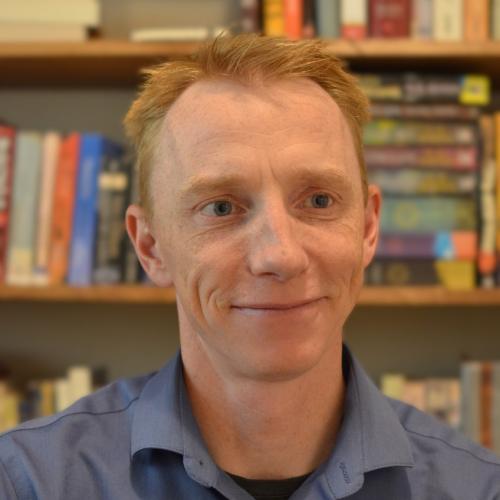
Dr. Dennis Orton
PhD, FCACB · Clinical Associate Professor
Clinical Biochemist, BC Children's Hospital
Department of Pathology & Laboratory Medicine
University of British Columbia
Department of Pathology & Laboratory Medicine
University of British Columbia
Dr. Orton is a paediatric clinical biochemist with a PhD in Pathology from Dalhousie University and fellowship training at the University of Calgary. His research spans clinical mass spectrometry method development, targeted proteomics, pharmacogenomics, and rare disease diagnostics in paediatric populations. With 19 peer-reviewed publications, he brings rigour and a passion for minimally invasive diagnostics to everything he teaches.

Dr. Janet Simons
MD, FRCPC (Int Med & Med Biochem)
Medical Biochemist, St. Paul's Hospital, Providence Health Care
Clinical Assistant Professor
University of British Columbia
Clinical Assistant Professor
University of British Columbia
Dr. Simons is uniquely dual-qualified in both Internal Medicine and Medical Biochemistry, bridging the gap between bedside practice and the clinical laboratory. A graduate of McMaster University, her research focuses on cardiac biomarkers, lipid disorders, and test utilisation — areas where data-driven thinking directly improves patient care. She was named a 2022 Choosing Wisely Champion for her leadership in appropriate laboratory test utilisation.